


The Retraction of Rizal
- Alexandra Angeles
- Sep 26, 2021
- 4 min read

Updated: Jan 20, 2022
For years, Catholic Church historians and nationalists have argued about Rizal's Retraction. When we look at the internal criticism of primary and secondary sources, we find an underlying question that brings into question who Rizal is to us. Rizal was associated with various ladies during his lifetime, and with his brains and wits, who would not be enchanted?
Dr. Jose P. Rizal is a Filipino national hero who battled for our independence using peaceful reforms. On December 26, 1896, he was charged with rebellion, sedition, and illegal affiliation with a militant organization. Then later December 28, the Governor-General confirmed Rizal's death sentence and scheduled his execution for De
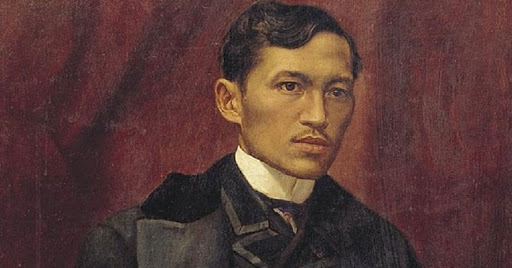
cember 30 at 7:00 a.m. Rizal's death sentence was read to him in the early hours of December 29. His final 24 hours in Fort Santiago were regarded as his retraction moments. According to the testimonies of an eyewitness, Fr. Vicente Balaguer Llacer, Rizal begged to be visited by Fathers of the Society of Jesus, who had educated him. The Jesuit fathers ordered Father Sanchez to encourage him to retract. Rizal and Father Pastells had written several extensive letters to each other for the same purpose, in which Rizal discussed the pros and cons of the Retraction with the Jesuits. Rizal then chose to retract on December 29, telling her sister, Maria, who had come to see him at Fort Santiago, to bid him farewell that he was going to marry Josephine.
Before ministering the Sacraments to Rizal, Fr. Balaguer and Fr. Villaclara went to the chapel cell, and the Archbishop sent a commission to the Ateneo, instructing them to make Rizal a public retraction of errors publicly professed by him in words and writings, as well as a profession of the Catholic faith. The Archbishop also offered Fr. Balaguer the Retraction and profession of faith formula, which Rev. Father Pio Pi wrote for a more simple and shorter formula. When the two fathers met Rizal, he appeared to be a Protestant because the Sacred Scriptures were his rule of faith. After a few disputes, Rizal declared himself a rationalist or freethinker, with Fr. Balaguer exchanging a few comments about how nonsensical rationalism is in light of the vast bulk of humanity's lack of knowledge. Fr. Balaguer confronted him with argument and evidence of Catholic truth, telling him that if he does not give up his mind and reason for the sake of faith, he will be doomed. Rizal yelled out, "No, I will not damn myself," after hearing the threat. However, he was impeded by a new venture of going to hell. It's strange to think that a rational thinker like Rizal would cry over a disagreement about his faith. But he was moved by Fr. Balaguer's words and claimed that he would say yes to everything and sign everything they present to him without meaning it, even if it would make him a hypocrite and offend God.
Lastly, he writes, "I declare myself a Catholic and wish to live and die in this religion." He also requested that the phrase, "in which I was born and educated," be included after the word religion, as though he wanted to emphasize his Catholic education.
Including giving up the masonry, an enemy of the Church. Rizal penned and signed his name to ensure the legitimacy of his work, which two Jesuits witnesses named Juan del Fresno, The Chief of the Picket, and Eloy Moure, The Adjutant of the Plaza.
According to Fr. Balaguer's comprehensive reports regarding the Retraction, Rizal appeared to be a little bit unreasonable. Based on Frederico Moreno's account, a written document reported to the Cuerpo de Vigilancia by a Guardia civil aligns on the same date as the one from Rizal's declaration of Retraction. Still, some Nationalists question his reasons for suddenly abandoning his strong objections to the Catholic Church. Contrarily, the Catholic Church positively favors Rizal's Retraction, possibly because they have a personal stake in it. The Retraction could have been credible, but it could also have been overstated to make it appear better from a theological standpoint. To think that a man of his words, publicly opposing the Catholic Church then turning around to marry the woman he loves and die as a Catholic.
Whether the Retraction is legitimate or not, it does not invalidate Dr. Jose Rizal's contributions and sacrifices to his homeland. Neither fabricates his strong opposition to abuses perpetrated by the friars in positions of influence in the Catholic Church. Rizal claimed to despise not his faith but those who sit in power and use it to control and abuse the vulnerable. I suppose Rizal's last 24 hours made him reflect on his final wish. That is why he asked explicitly about the Retraction's pros and cons. It is possible that he did it out of love for Josephine Bracken. Even if a counterfeit were made on the documents, Jose Rizal's contribution in resisting the oppressors with his intellect and intelligence in reading, writing, and debating would not be diminished. If others consider that Rizal's Retraction was hypocritical and unreasonable, then so be it. It was his final hours to fulfill his wish of marrying Josephine. Regardless of who he is and what he represents to the Filipino nation, he also has the right to do anything he would want before his death.
References
Cavanna, J. M. (n.d.) The unfading glory: Documentary history of the conversion of Jose Rizal [s.n.], pp. 1-52.
Garcia, R. P. (1964). The great debate: The Rizal retraction, pp. 9-19, 31-43. Quezon City, Philippines: R.P. Garcia
Pascual R. (1950). Rizal beyond the grave: A reiteration of the greatness of the martyr of Bagumbayan, pp. 7-36. Manila, Philippines: Luzon Publishing.


Comments